Wednesday, 1 June 2016

Beauty tips for girls


In the world of beauty, there are endless beauty tips and rules to keep you looking fabulous. From secrets about how to style your hair without heat to brilliant ways to fix a broken compact case, the more beauty tips you know, the better you’ll be prepared to handle every situation thrown at you — and look good while doing so. In the list of beauty advice below Beauty High breaks down all those tricks to make the industry less scary for women from makeup artists, hairstylists, skincare gurus and of course, our beauty staff. Remember, beauty should /beauty/beauty-tips-for-girls/always be fun!

101. “Always keep your summer makeup minimal. Minimal and sheer makeup is the way to go when it’s hot and muggy outside.” – Mary Greenwell, celebrity makeup artist

100. “The best thing to do when you go to a makeup counter is be armed with what it is you want to do.”- Raychel Wade, founder of Cheek to Chic and La Prairie’s colour ambassador

99. Use excess eye cream on cuticles. The more you hydrate your cuticles, the stronger your nails will be.

98. For smudge-proof eye makeup, take blotting tissue to remove any oil or any excess makeup from the eye area. Then, apply a small dab of cream concealer to hold things in place.

97. “A good perfume should consist of balanced blend of notes arranged in a way that creates harmonious accord.”- Alexis Bergman, P&G’s Global Flavor and Fragrance Trends

96. To prevent hair color from fading in the summer months, use a conditioning treatment weekly or bi-monthly.

95. Breakout before a big event? “Take oral cortisone a few days before the event to clear your skin”- Ava Shamban, dermatologist and author of Heal Your Skin.

94. “In order to keep eyeliner from running and smearing, opt for liner formulas that offer stayproof wearability.”- Robin Schoen, Urban Decay Makeup Artist

93. Always allow about two fingers from your nose to where blush starts.


92. “Make sure you hydrate the skin and put on a primer”- Jessie Powers, makeup artist and national educator for Make Up For Ever

91. “Balance out your shimmer. If you’re doing a shimmery eye, opt for a matte lipstick.”- Raychel Wade, founder of Cheek to Chic and La Prairie’s colour ambassador

90. Brush out your curls with your fingers to give your hair a more tousled look.

89. To make your manicure last, apply a thin layer of clear every two days. Pay particular attention to the free edge at the top of your nails, where chips usually happen, and apply extra clear polish there.

88. Wear white eyeliner in your water line to make eyes appear less red.

87. “Take a shimmery gloss to the center of your lips, top and bottom – this will attract light to your lips, making them look pouty.”-Katrina Barrion, makeup artist for Giella Custom Blend Cosmetics

86. For slicked back hair, use a hair serum.

85. For the perfect cat-eye, “select a thin liner brush that is tapered to the point.”- Pamela Taylor, makeup artist. Use a gel eyeliner for extra staying power.

84. To make your cheek bones appear higher, use bronzer under the cheekbone and highlighter on the actual cheekbone, and remember to blend. Contouring at its finest!

83. Before you blow dry, start with a volumizing spray or light gel to give the roots some lift. Pull the brush up towards the ceiling to really boost volume.

82. For fuller lips, extend the lip line using a flesh tone lip liner. Be careful not to go overboard, though!

81. The #1 reason for flaky mascara is that the formula is too dry or old. Make sure to close mascara after use to help keep its moisture. To extend the life a bit, add 2-3 drops of saline solution into the tube and swirl the brush around.

80. To fake clear skin when you notice a pimple, “Apply tea tree oil as soon as you spot it”- Stephanie Flor, makeup artist.

79. During summer, “Its easy to forget that feet can get sunburned. Be sure to apply sunscreen with a minimum SPF of 50 when barefoot”- Dr. Leslie Campbell, DPM.

78. For acne-free skin, look for a cleanser with salycilic acid or benzoyl peroxide.

77. When choosing a red lipstick, you just want to remember to get one that looks good with your undertone. If you have a warm undertone, then go for warmer reds, and if you have a cool undertone, then go cooler.

76. Sunscreens that claim to provide “all-day protection” and “water resistance” are not reliable; don’t be fooled by these claims and reapply all sunscreens at least every 2-3 hours.

75. When self-tanning, use a tanner with a guide color. “It will give you instant color before the effect and it will show you exactly where you put the color and where you may have missed”- Sinead Norenius, founder of Beautisol.

MORE: Beauty Industry 101: Experts Share Advice On How to Land Any Job

74. “If you’re afraid of red lipstick, I love putting it on and then blotting it off to wear it as more of a stain”- Pat McGrath, makeup artist. Another way to make it less intense? Apply with your fingertip instead of straight from the tube.

73. For the summer months, you don’t want to be caked down in foundation, so try a tinted moisturizer or BB cream instead.

72. Use blotting papers to manage oil and shine in your T-Zone, “which are also great for cleaning up around the eyes”- Rebecca Restrepo, makeup artist.

71. The antihistamines in allergy medicine dry out the skin, so skip heavy foundation during allergy season. Instead, use a tinted moisturizer.

70. To make curls last, make sure hair is completely dry before you begin with the curling iron. Also, use a heat protectant spray with hold on damp hair to keep hair protected.

69. To make a zit go away faster, don’t pick at it. The bacteria on your fingers will create more redness, and any attempt at popping will make things worse.

68. Use an exfoliator to get rid of dead skin, but limit yourself to 2-3 times a week so you don’t dry out your skin. Use a gentler scrub on your face and a coarser scrub on the rest of your body.

67. Always wash your makeup off before bed. “That morning-after look has never been a good one, for anyone”- Rachel Adler, beauty director at Beauty High.

66. “Too much bronzer is a nightmare for pale skin”- Jason Ascher, resident beauty expert for Barneys New York. Opt for an illuminating cream or light powder to get a glow.

65. Pick a sulfate-free shampoo, as sulfates can be harsh and drying on the hair cuticle.

64. If you have greasy hair, avoid directly conditioning roots and condition from your ear down to ends.

63.”When you wear a red lip it’s important that it stays exactly where you put it. Using a long wearing lip pencil to create the perfect shape and a lip color are key to having a perfect red lip.”-Kristofer Buckle, celebrity makeup artist

62. To make volume last all day, avoid running your fingers through hair. “Oil from your hands can weigh down your roots leaving your hair flat at the end of the day”-Tatum Neill, Arrojo Studio

61. Try to avoid washing your hair everyday. Constant shampooing leaves hair dry and your scalp will create more oils to compensate for the loss of moisture. Instead, use a dry shampoo and style your hair into a braid or ponytail when it’s a bit more oily.

60. Always use a moisturizer with SPF in the morning. Even in the winter!

59.”Go for a trim every 6-8 weeks to ensure you have no damaged ends making your hair look unhealthy”- Nick Arrojo, Arrojo Studio (and the man who worked for seven years changing lives on What Not To Wear).

58. Remember, clean your makeup brushes to fight against potential bacteria and breakouts! At least once a week, swirl brushes around in a mixture of warm water and mild soap, then lay flat to dry.
57. Clean out your makeup bag at least once a year to get rid of old products that may be expired or you no longer use.

56. Winter can be especially harsh on your hair leaving it extra dry. Eugene Davis, celebrity hair stylist suggests using an Avocado Oil Hair Mask.

55. If you don’t have nail polish remover, apply clear nail polish over your nail, and then wipe off. It will remove old polish.

MORE: 50 Best Beauty Blogs

54. During the summer, wear lip balm or gloss with SPF.

53. To add volume to clean or unwashed hair, use a dry shampoo spray.


Top 10 affordable romantic getaway in Nigeria


Vacations are awesome especially when you go with someone you care very much for. Sometimes, you just need to get away from the hectic everyday life, and who says you have to leave the country or break the bank to do it?

Your readers would greatly appreciate these getaway tips. Please see article attached.

Is your relationship becoming boring and monotonous? Do you often feel like you and the lover hardly ever have time to just be together? With everyone busy so busy and having really tight schedules nowadays, it’s understandable that these feelings should creep up once in a while. However, when you start to feel like choked, it’s time to getaway./top-10-affordable-romantic-getaways-nigeria/

Vacations are awesome especially when you go with someone you care very much for.  Sometimes, you just need to get away from the hectic everyday life, and who says you have to leave the country or break the bank to do it? Jovago.com, Africa’s Number 1 Hotel Booking Portal has put together a list of 10 affordable places you could take your sweetheart to, to bring the spark back to your romance.
             Obudu Mountain Resort


Obudu Cattle Ranch is till date the most popular choice for couples’ retreats, or any kind of retreat at all. Located in Cross River State, the resort features mountain villas, cuisine that is as unique as it is divine, a fully equipped gym (for fitness nuts), a natural swimming pool and other amazing amenities. Visit Obudu and enjoy the beautiful countryside, relaxing atmosphere, and great sights. You can book a weekend at Obudu through trusted agents.

La Manga Luxury Villas
The La Manga Beach Resort is a glorious paradise on the Ilashe Island, Lagos. A weekend here allows you the opportunity to enjoy the beauty of nature. Have a picnic under one of the numerous palm trees or on the beach, or take a walk along the coastline, or just lay back and take in the scenery.

La Campagne Tropicana Beach Resort
This beach resort is a pretty favored weekend getaway location in Lagos and offers several enjoyable activities like hiking, fishing, and swimming, among many others. There are several ways you can have fun together as well as enjoy the resorts beauty and treat yourselves to the resort’s mini spa services.

Le Meridien Ibom Golf Resort
Situated atop very rich palm forest vegetation, the Le Meridien is most popular for its exceptional golf courses and is the pride of Akwa Ibom. The amazing food and gorgeous rooms are just bonuses! A weekend here will allow couples spend quality time together while engaging in a number of activities, of which there are several to choose from, and enjoying a natural, unique environment.

Kamp Ikare
Kamp Ikare is another great place to go to escape the city life and still enjoy moden pleasures. Located along a stretch of coastline near Ikare Village, the resort boasts an endless stretch of white sand and a pristine ocean view and is only accessible by boat.

Eko Tourist Resort
Located along the Lagos-Epe Expressway, the Eko Tourist Resort is also an amazing choice for a weekend hideaway. Palm trees dancing in the wind, beaches with white sand you can crunch between your toes, clear water ahead of you, and serenity. Why wouldn’t you want to lodge in one of their luxurious rooms?

The Whispering Palms
Whispering Palms is a resort that offers a brilliant combination of fun activities, exceptional cuisine, fun in the sun and sea, and relaxing scenery. It’s worth a trip to Badgry to enjoy everything this resort has to offer you and your lover.

Epe Resort & Spa
Who doesn’t love a relaxing spa day? Why not enjoy a spa weekend with your lover? Visit the Epe Resort and Spa to enjoy an all-inclusive cuisine, a relaxing environment, and ultimate 


How To Plan An Event Successfully

How to Plan an Event

Event Planning Guide Table of Content

How to Plan an Event
 
What does event planning involve? Here is a high-level overview are some of the basic steps you’ll need to follow when developing an event. We can't identify all of the details you’ll need to think about (since much of it will depend on the type of event you are holding), but we hope the following provides a starting point for your event planning.

10 Steps to Get You Started With Event Planning

1.      Develop Event Goal and Objectives

The very first step is to establish a tangible goal and  objectives. (e.g., why are you organizing this event and what do you hope to achieve?)

2.      Organize a Team

Any event takes a concerted team effort to handle all of the details. Consider identifying one key Event Manager or Event Chair as well as individual Chairpersons for subcommittees, such as:
  • venue management;
  • speakers;
  • entertainment;
  • publicity;
  • sponsors;
  • volunteer management

3.      Set a Date

The date might already be pre-set for a reoccurring event, but if this is a new event, be sure to consider the following before firming up your date:
  • Give yourself enough time! Ideally, you should have 4-6 months to plan (depending on the nature of your event)
  • Be aware of statutory and religious holidays
  • Avoid school holiday time periods (e.g., winter, spring and summer holidays)
  • Check dates with key participants – e.g., speakers, presenters, VIP guests, etc.


4.     
 Brand Your Event

If you want your event to stand out, you need to choose a timely and compelling theme that sets you apart from your competition. This means that you need to come up with a dynamic overall theme and you need to take great care with the actual name – since it can be a key attention-getter, especially in online media.
  • Brainstorm names: When you are brainstorming the event name, think about:
    • how is your event different from other events in your sector?
    • what are you hoping to convey through this event?
  • Create a Tagline: Once you’ve come up with a name, also try to craft a tagline – a short, memorable branding slogan that describes the event. 
  • Design a Logo: The final step will be having a logo created to represent your event. A logo can be an effective branding tool – offering immediate recognition of your event in all of your publicity and promo items (e.g., Tshirts, water bottles, bags, etc.) 

5.      Create a Master Plan:

This plan should encompass all aspects of the event, including:
  • Venue, logistics & catering management (contracts, permits, insurance, etc.)
  • Speakers/presenters (identifying, confirming, logistics & management)
  • Activities/entertainment
  • Publicity/promotion (online & off-line, e.g.,: web page & online promotion; events calendars; printed programs; media relations; signage; social media, etc.)
  • Registration (online sign-up, payment and tracking; on-site sign-in, etc.)
  • Sponsor/partner management
  • Volunteer management

6.      Determine Administrative Processes

In other words, how are you going to keep track of your planning, registration, budget, guest and speakers lists, etc.? 
If you are a Wild Apricot Membership Management client, you can quickly and easily create an event and manage your registration through our online event management system.
If your website or membership database is not powered by Wild Apricot, you may want to determine how to best organize and track all of your event information. You could review event management software tools through a directory, such as Capterra (http://www.capterra.com/event-management-software).

7.      Identify and Establish Partnerships & Sponsors

Are there organizations that you could partner with or call on for sponsorships to defray the costs and increase potential participation?  When you involve other people or groups in your event, they have a stake in helping spread the word and making the event a success.
You might want to consider:
  • Seeking corporate sponsors to fund a portion of the event. This can range from national organizations that might want to sponsor a dinner, offer a door prize or a key silent auction item, to local businesses that might be able to provide goods or services, such as flowers for the tables, gift bag items, etc.
  • Partnering with community organizations who might be able to offer a venue and/or assistance with organizing or staffing an event

8.      Create a Publicity Plan

Even with the most amazing speaker or entertainment line-up, you need publicity to get people in the door.  Event promotion starts with the initial notice or page on your website, note in your newsletter or email to save the date, and then builds to include online and off-line publicity, media relations and on-going outreach to encourage registration. And no plan is complete without the post-event thank-you’s, sponsor acknowledgements and articles about the event’s key messages or fundraising success.

9.      Establish a Budget

Your budget should incorporate estimates for all of the key items identified on your Event Master Plan. Don’t forget to include any travel or accommodation costs for speakers, presenters, etc.

10.    Determine Evaluation Process

How will you determine if your event is a success? Do you measure success by the number of registrants or attendees or is it dependent on you breaking even or raising a target amount in donations? 
When you set your initial event goals and objectives, you should also consider how you will evaluate the event to determine your success.  If you are using a membership management software package, such as Wild Apricot’s, you can easily track registration numbers and fees. But, if your event involves tracking, for example, a silent auction, then you’ll need to put some processes in place to identify goods offered in kind and funds raised at the event. 
By the same token, if the objective of your event is to raise awareness, you’ll have to benchmark and gather data on online social media activity/mentions etc. and offline publicity – again based on your initial goals.

Newlywed on honeymoon dorwns

Wednesday, June 1, 2016

Photo: Newlywed on honeymoon drowns in hotel pool

A newlywed Chinese man drowned in a hotel swimming pool while on honeymoon in Pattaya, Thailand, in the early hours of Wednesday, June 1.

20-year-old student, Han Mu drowned in the swimming pool of the Adriatic Palace Hotel in tambon Nong Prue of Bang Lamung district early this morning around 1am
Sawangborirbon organisation rescuers rushed to the hotel and found the Chinese man lying unconscious on the edge of the swimming pool. Medics gave the man CPR, but could not resuscitate him.

The man’s wife broke into tears beside his body. The couple were newlyweds and had flown to Pattaya for their honeymoon.

Suthi, 32, a Myanmar employee at the hotel, said he heard cries for help from the swimming pool and rushed to see what was wrong. At the pool he saw the Chinese man was drowning. He immediately jumped into the pool and pulled him out.
He said the man was unconscious and barely breathing. He immediately called rescue workers bu the man died.

#PayCode322Series

Wednesday, June 1, 2016

Obi mo! A tale of Owerri’scutest couple and Café 322. #PayCode322Series

Based on true events. Even after they got married, He never stopped calling her his girlfriend; for him, it had nice ring to it, and speaking of rings, her friends are still envious. She hated when he sang that “Baby girl my love is hotter than the sun in Sokoto” but the love in his face when he grabbed her hair dryer for a microphone was magic.

Although she was Yoruba and he was Igbo, He taught her how to make a proper pot of ‘Ofe-Owerri’ while he never failed to double lick his fingers when she made him Efo-Oriro with kpomo and other obstacles, it reminded him of their undergraduate years when they visited Buka 322...


This morning, he sneaked out of bed. She peeped with half closed eyes like she didn’t have a clue. They both dressed up in total silence, stealing occasional glances with a straight face. The ride to work was weirdly silent; the radio just buzzed away. At work, she peered at her phone screen, there were no notifications from him, Game on!
7:04pm. Exhausted, she did the locks and got into the house… “so he didn’t remember” she puzzled in her head while taking off her shoes. She slumped on the bed, something definitely bounced with her, it was a red gown with a note that read “Slip this on and meet me at the café 322”. Filled with excitement, she dressed up and slammed on the accelerator.
“You didn’t think I would forget our anniversary did you?” He said with food in his mouth, the pounded yam and Egusi soup he ordered was getting the best of him.
“Was that what the awkward silence this morning was for?” she quizzed.
“Yemisi darling, you know I could ask the same right?” He replied.
“Emeka, don’t go there, you didn’t kiss me this morning” she stared blankly at his face.
“Baby, you know I miss those lips that all I pity right now is the lipstick” he replied while she blushed a bucket full.
Happy anniversary obi mo, babyIma no sosogikam choro na this life” she said, romantically accentuating her unpolished Igbo. She remembered how many times he taught her that they meant “You know it’s just you I want in this life”
On the ride back home, He mimickedBanky W while she eased in to Chidinma as they turned the car into an ‘All I want is you’ karaoke. As soon as they got home, He got in the closet, searching for the envelope he had earlier felt in his jacket. He ripped it open, It was funny that it contained a Paycode, a PIN and it read “For those brogues you wanted to buy.” He had slipped a similar envelope with a Paycode in her bag and it read “Omalicha, For that Louboutin shoe you gush over!”
For them, it was just as easy as;download the Verve World app, register, generate the Paycode on the app or simply dial *322*8*AMOUNT#. That night, the duvet struggled to maintain its sanity and the light bulbs are still begging to be turned on.

How to win the heart of a Nigerian girl on a fist date


 You finally asked the girl you like out. Of course you want your first date to be perfect. You have to be a king of coolness to win her heart.
1 Nigerian ladies prefer confident and strong guys. So you should be well prepared.

2 Pick up a right place. It should not be too “luxury”, but comfortable and capable with your budget. If you have no ideas – ask her about the places she likes. But remember that the final decision is up to you.

3 Take a small gift. It can be flowers, chocolate or her favorite candies. Something that will make her feel special.

4 You should pay for the dinner. Unless it was she who asked you for a date. But even in that case you should deny her proposal to pay the bills. Remember that Nigerian girls love confident men

5 First date shouldn’t be very long. It is better to go to the movies or for a dinner. But if you like her you must make her understand that there will be a second date.

6 Look in her eyes during a conversation. But not stare at her like a pervert. You should not look like you are just lusting after her.

7 Don’t talk about yourself too much. It is better to get know her better on a first date. Of course answer her if she asks some questions about you. But you should leave some mystery. Then she would like to meet you again. Of course, that is if she likes you.

8 Be funny. But just funny to make her laugh, don’t pretend to be a stupid person. If you can make woman laugh you can make her do anything for you.

READ ALSO: 7 Main Things Guys Notice In Women

9 Be natural. You should not pretend to be someone you are not.

10. Pay Attention To Your Looks. Nigerian girls will surely pay attention to your clothes and hair. So look nice and dress well. Be well-groomed but not too much.  Be confident and sincere and then everything will go well

Your modern day girlfriend

She's crazy as hell yes and sometimes it rubs off on you,she does it all wrong but that's her way of saying that she needs your help and support,she is stubborn and strong headed but with the softest of heart so easy to melt. She wants it all but it means nothing at all without you by her side she's your modeen day girlfriend
     Of course she lives a stressful life when she has you as a rock, she's flawlessly beautiful, beauty you can't compare and she holds you in her palm with all her charms and just her smile,she's your personal fashionista and your home made designer,she's your modern day girlfriend.
   She comes around and everything is sparkly clean,yes she loves cooking but she enjoys your company as she makes you a meal,she's your support when you're down and pushes you occasionally, she's fun and laughs at all your jokes funny or not,she's your modern day girlfriend.
She's emotional and in constant need of your soothing words and your shoulder to cry on,she's a dreamer,a success, she's your pride and one and only,trust me she will not share,she's your model ,your bestfriend, your happiness and your worst headache LOL she's your modern day girlfriend.
   
                                                                                       
                                                                                                                              -kaloire

Tuesday, 31 May 2016

AY Live: Gordons takes on Princess, Mo Hits, Mode 9

SEYILAW SHARES SOME OF HIS EXPERIENCE

Funny African Dancing (i'm sorry) 2015

Funny African Dancing (i'm sorry) 2015

Nuer, history of a refugee (Ethiopia)

Computer Network

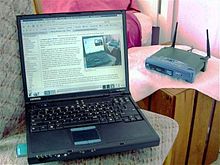
A computer network or data network is a telecommunications network which allows computers to exchange data. In computer networks, networked computing devices exchange data with each other using a data link. The connections between nodes are established using either cable media or wireless media. The best-known computer network is the Internet.
Network computer devices that originate, route and terminate the data are called network nodes.[1] Nodes can include hosts such as personal computers, phones, servers as well as networking hardware. Two such devices can be said to be networked together when one device is able to exchange information with the other device, whether or not they have a direct connection to each other.
Computer networks differ in the transmission medium used to carry their signals, the communications protocols to organize network traffic, the network's size, topology and organizational intent.
Computer networks support an enormous number of applications such as access to the World Wide Web, video, digital audio, shared use of application and storage servers, printers, and fax machines, and use of email and instant messaging applications as well as many others. In most cases, application-specific communications protocols are layered (i.e. carried as payload) over other more general communications protocols.

Properties

Computer networking may be considered a branch of electrical engineering, telecommunications, computer science, information technology or computer engineering, since it relies upon the theoretical and practical application of the related disciplines.
A computer network facilitates interpersonal communications allowing users to communicate efficiently and easily via various means: email, instant messaging, chat rooms, telephone, video telephone calls, and video conferencing. Providing access to information on shared storage devices is an important feature of many networks. A network allows sharing of files, data, and other types of information giving authorized users the ability to access information stored on other computers on the network. A network allows sharing of network and computing resources. Users may access and use resources provided by devices on the network, such as printing a document on a shared network printer. Distributed computing uses computing resources across a network to accomplish tasks. A computer network may be used by computer crackers to deploy computer viruses or computer worms on devices connected to the network, or to prevent these devices from accessing the network via a denial of service attack.

Network packet

Main article: Network packet
Computer communication links that do not support packets, such as traditional point-to-point telecommunication links, simply transmit data as a bit stream. However, most information in computer networks is carried in packets. A network packet is a formatted unit of data (a list of bits or bytes, usually a few tens of bytes to a few kilobytes long) carried by a packet-switched network.
In packet networks, the data is formatted into packets that are sent through the network to their destination. Once the packets arrive they are reassembled into their original message. With packets, the bandwidth of the transmission medium can be better shared among users than if the network were circuit switched. When one user is not sending packets, the link can be filled with packets from others users, and so the cost can be shared, with relatively little interference, provided the link isn't overused.
Packets consist of two kinds of data: control information, and user data(payload). The control information provides data the network needs to deliver the user data, for example: source and destination network addresses, error detection codes, and sequencing information. Typically, control information is found in packet headers and trailers, with payload data in between.
Often the route a packet needs to take through a network is not immediately available. In that case the packet is queued and waits until a link is free.

Network topology

Main article: Network topology
The physical layout of a network is usually less important than the topology that connects network nodes. Most diagrams that describe a physical network are therefore topological, rather than geographic. The symbols on these diagrams usually denote network links and network nodes.

Network links

The transmission media (often referred to in the literature as the physical media) used to link devices to form a computer network include electrical cable (Ethernet, HomePNA, power line communication, G.hn), optical fiber (fiber-optic communication), and radio waves (wireless networking). In the OSI model, these are defined at layers 1 and 2 — the physical layer and the data link layer.
A widely adopted family of transmission media used in local area network (LAN) technology is collectively known as Ethernet. The media and protocol standards that enable communication between networked devices over Ethernet are defined by IEEE 802.3. Ethernet transmits data over both copper and fiber cables. Wireless LAN standards (e.g. those defined by IEEE 802.11) use radio waves, or others use infrared signals as a transmission medium. Power line communication uses a building's power cabling to transmit data.

Wired technologies

Fiber optic cables are used to transmit light from one computer/network node to another
The orders of the following wired technologies are, roughly, from slowest to fastest transmission speed.
  • Coaxial cable is widely used for cable television systems, office buildings, and other work-sites for local area networks. The cables consist of copper or aluminum wire surrounded by an insulating layer (typically a flexible material with a high dielectric constant), which itself is surrounded by a conductive layer. The insulation helps minimize interference and distortion. Transmission speed ranges from 200 million bits per second to more than 500 million bits per second.
  • ITU-T G.hn technology uses existing home wiring (coaxial cable, phone lines and power lines) to create a high-speed (up to 1 Gigabit/s) local area network
  • Twisted pair wire is the most widely used medium for all telecommunication. Twisted-pair cabling consist of copper wires that are twisted into pairs. Ordinary telephone wires consist of two insulated copper wires twisted into pairs. Computer network cabling (wired Ethernet as defined by IEEE 802.3) consists of 4 pairs of copper cabling that can be utilized for both voice and data transmission. The use of two wires twisted together helps to reduce crosstalk and electromagnetic induction. The transmission speed ranges from 2 million bits per second to 10 billion bits per second. Twisted pair cabling comes in two forms: unshielded twisted pair (UTP) and shielded twisted-pair (STP). Each form comes in several category ratings, designed for use in various scenarios.

2007 map showing submarine optical fiber telecommunication cables around the world.
  • An optical fiber is a glass fiber. It carries pulses of light that represent data. Some advantages of optical fibers over metal wires are very low transmission loss and immunity from electrical interference. Optical fibers can simultaneously carry multiple wavelengths of light, which greatly increases the rate that data can be sent, and helps enable data rates of up to trillions of bits per second. Optic fibers can be used for long runs of cable carrying very high data rates, and are used for undersea cables to interconnect continents.
Price is a main factor distinguishing wired- and wireless-technology options in a business. Wireless options command a price premium that can make purchasing wired computers, printers and other devices a financial benefit. Before making the decision to purchase hard-wired technology products, a review of the restrictions and limitations of the selections is necessary. Business and employee needs may override any cost considerations.[6]

Wireless technologies

Computers are very often connected to networks using wireless links
Main article: Wireless network
  • Terrestrial microwave – Terrestrial microwave communication uses Earth-based transmitters and receivers resembling satellite dishes. Terrestrial microwaves are in the low-gigahertz range, which limits all communications to line-of-sight. Relay stations are spaced approximately 48 km (30 mi) apart.
  • Communications satellites – Satellites communicate via microwave radio waves, which are not deflected by the Earth's atmosphere. The satellites are stationed in space, typically in geosynchronous orbit 35,400 km (22,000 mi) above the equator. These Earth-orbiting systems are capable of receiving and relaying voice, data, and TV signals.
  • Cellular and PCS systems use several radio communications technologies. The systems divide the region covered into multiple geographic areas. Each area has a low-power transmitter or radio relay antenna device to relay calls from one area to the next area.
  • Radio and spread spectrum technologies – Wireless local area networks use a high-frequency radio technology similar to digital cellular and a low-frequency radio technology. Wireless LANs use spread spectrum technology to enable communication between multiple devices in a limited area. IEEE 802.11 defines a common flavor of open-standards wireless radio-wave technology known as Wifi.
  • Free-space optical communication uses visible or invisible light for communications. In most cases, line-of-sight propagation is used, which limits the physical positioning of communicating devices.

Exotic technologies

There have been various attempts at transporting data over exotic media:
Both cases have a large round-trip delay time, which gives slow two-way communication, but doesn't prevent sending large amounts of information.

Network nodes

Main article: Node (networking)
Apart from any physical transmission medium there may be, networks comprise additional basic system building blocks, such as network interface controller (NICs), repeaters, hubs, bridges, switches, routers, modems, and firewalls.

Network interfaces
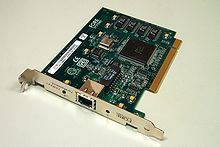
An ATM network interface in the form of an accessory card. A lot of network interfaces are built-in.
A network interface controller (NIC) is computer hardware that provides a computer with the ability to access the transmission media, and has the ability to process low-level network information. For example, the NIC may have a connector for accepting a cable, or an aerial for wireless transmission and reception, and the associated circuitry.
The NIC responds to traffic addressed to a network address for either the NIC or the computer as a whole.
In Ethernet networks, each network interface controller has a unique Media Access Control (MAC) address—usually stored in the controller's permanent memory. To avoid address conflicts between network devices, the Institute of Electrical and Electronics Engineers (IEEE) maintains and administers MAC address uniqueness. The size of an Ethernet MAC address is six octets. The three most significant octets are reserved to identify NIC manufacturers. These manufacturers, using only their assigned prefixes, uniquely assign the three least-significant octets of every Ethernet interface they produce.

Repeaters and hubs

A repeater is an electronic device that receives a network signal, cleans it of unnecessary noise and regenerates it. The signal is retransmitted at a higher power level, or to the other side of an obstruction, so that the signal can cover longer distances without degradation. In most twisted pair Ethernet configurations, repeaters are required for cable that runs longer than 100 meters. With fiber optics, repeaters can be tens or even hundreds of kilometers apart.
A repeater with multiple ports is known as a hub. Repeaters work on the physical layer of the OSI model. Repeaters require a small amount of time to regenerate the signal. This can cause a propagation delay that affects network performance. As a result, many network architectures limit the number of repeaters that can be used in a row, e.g., the Ethernet 5-4-3 rule.
Hubs have been mostly obsoleted by modern switches; but repeaters are used for long distance links, notably undersea cabling.

Bridges

A network bridge connects and filters traffic between two network segments at the data link layer (layer 2) of the OSI model to form a single network. This breaks the network's collision domain but maintains a unified broadcast domain. Network segmentation breaks down a large, congested network into an aggregation of smaller, more efficient networks.
Bridges come in three basic types:
  • Local bridges: Directly connect LANs
  • Remote bridges: Can be used to create a wide area network (WAN) link between LANs. Remote bridges, where the connecting link is slower than the end networks, largely have been replaced with routers.
  • Wireless bridges: Can be used to join LANs or connect remote devices to LANs.

Switches

A network switch is a device that forwards and filters OSI layer 2 datagrams (frames) between ports based on the destination MAC address in each frame.[9] A switch is distinct from a hub in that it only forwards the frames to the physical ports involved in the communication rather than all ports connected. It can be thought of as a multi-port bridge.[10] It learns to associate physical ports to MAC addresses by examining the source addresses of received frames. If an unknown destination is targeted, the switch broadcasts to all ports but the source. Switches normally have numerous ports, facilitating a star topology for devices, and cascading additional switches.
Multi-layer switches are capable of routing based on layer 3 addressing or additional logical levels. The term switch is often used loosely to include devices such as routers and bridges, as well as devices that may distribute traffic based on load or based on application content (e.g., a Web URL identifier).

Routers
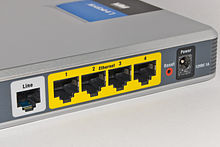
A typical home or small office router showing the ADSL telephone line and Ethernet network cable connections
A router is an internetworking device that forwards packets between networks by processing the routing information included in the packet or datagram (Internet protocol information from layer 3). The routing information is often processed in conjunction with the routing table (or forwarding table). A router uses its routing table to determine where to forward packets. A destination in a routing table can include a "null" interface, also known as the "black hole" interface because data can go into it, however, no further processing is done for said data, i.e. the packets are dropped.

Modems

Modems (MOdulator-DEModulator) are used to connect network nodes via wire not originally designed for digital network traffic, or for wireless. To do this one or more carrier signals are modulated by the digital signal to produce an analog signal that can be tailored to give the required properties for transmission. Modems are commonly used for telephone lines, using a Digital Subscriber Line technology.

Firewalls

A firewall is a network device for controlling network security and access rules. Firewalls are typically configured to reject access requests from unrecognized sources while allowing actions from recognized ones. The vital role firewalls play in network security grows in parallel with the constant increase in cyber attacks.

Network structure

Network topology is the layout or organizational hierarchy of interconnected nodes of a computer network. Different network topologies can affect throughput, but reliability is often more critical. With many technologies, such as bus networks, a single failure can cause the network to fail entirely. In general the more interconnections there are, the more robust the network is; but the more expensive it is to install.

Common layouts

Common network topologies
Common layouts are:
  • A bus network: all nodes are connected to a common medium along this medium. This was the layout used in the original Ethernet, called 10BASE5 and 10BASE2.
  • A star network: all nodes are connected to a special central node. This is the typical layout found in a Wireless LAN, where each wireless client connects to the central Wireless access point.
  • A ring network: each node is connected to its left and right neighbour node, such that all nodes are connected and that each node can reach each other node by traversing nodes left- or rightwards. The Fiber Distributed Data Interface (FDDI) made use of such a topology.
  • A mesh network: each node is connected to an arbitrary number of neighbours in such a way that there is at least one traversal from any node to any other.
  • A fully connected network: each node is connected to every other node in the network.
  • A tree network: nodes are arranged hierarchically.
Note that the physical layout of the nodes in a network may not necessarily reflect the network topology. As an example, with FDDI, the network topology is a ring (actually two counter-rotating rings), but the physical topology is often a star, because all neighboring connections can be routed via a central physical location.

Overlay network

A sample overlay network
An overlay network is a virtual computer network that is built on top of another network. Nodes in the overlay network are connected by virtual or logical links. Each link corresponds to a path, perhaps through many physical links, in the underlying network. The topology of the overlay network may (and often does) differ from that of the underlying one. For example, many peer-to-peer networks are overlay networks. They are organized as nodes of a virtual system of links that run on top of the Internet.[11]
Overlay networks have been around since the invention of networking when computer systems were connected over telephone lines using modems, before any data network existed.
The most striking example of an overlay network is the Internet itself. The Internet itself was initially built as an overlay on the telephone network.[11] Even today, each Internet node can communicate with virtually any other through an underlying mesh of sub-networks of wildly different topologies and technologies. Address resolution and routing are the means that allow mapping of a fully connected IP overlay network to its underlying network.
Another example of an overlay network is a distributed hash table, which maps keys to nodes in the network. In this case, the underlying network is an IP network, and the overlay network is a table (actually a map) indexed by keys.
Overlay networks have also been proposed as a way to improve Internet routing, such as through quality of service guarantees to achieve higher-quality streaming media. Previous proposals such as IntServ, DiffServ, and IP Multicast have not seen wide acceptance largely because they require modification of all routers in the network.[citation needed] On the other hand, an overlay network can be incrementally deployed on end-hosts running the overlay protocol software, without cooperation from Internet service providers. The overlay network has no control over how packets are routed in the underlying network between two overlay nodes, but it can control, for example, the sequence of overlay nodes that a message traverses before it reaches its destination.
For example, Akamai Technologies manages an overlay network that provides reliable, efficient content delivery (a kind of multicast). Academic research includes end system multicast,[12] resilient routing and quality of service studies, among others.

For further information on Communication protocols, the IEEE802 and others click on the link below
https://en.wikipedia.org/wiki/Computer_network
https://www.youtube.com/watch?v=7q-UW9XT4BM&list=PLV7zFBc6xjSA72uKWnyDAGDYyp2BkoRLC&index=4

do well to follow the link...